
Beginner investor, Part 1. How to get started successfully investing small amounts.
Table of contents
−Do you feel that investing is only available to those with big wallets? It's a common but dangerous myth that can have a strong impact on the motivation and confidence of the novice investor and keep people away from the financial world. In reality, you only need two things to start investing: discipline and a small initial sum. Technology has removed barriers to entry. It's perfectly realistic to start investing by regularly contributing as little as €10-50 each month.
This article does not give you a quick get-rich-quick guide - because with a small amount of money, you can usually... do not get rich in a short time. It is long marathon (10+ years). Instead, we will focus on the most important thing: how to find that first small contribution, establish an iron discipline and choose the most cost-effective tools to start your journey.
Inverse Equivalent Rule: Age vs. Money. The younger you start, the less you need to invest. That's the magic of compound interest. For example, if you start at the age of 25 and invest consistently for 10 years.
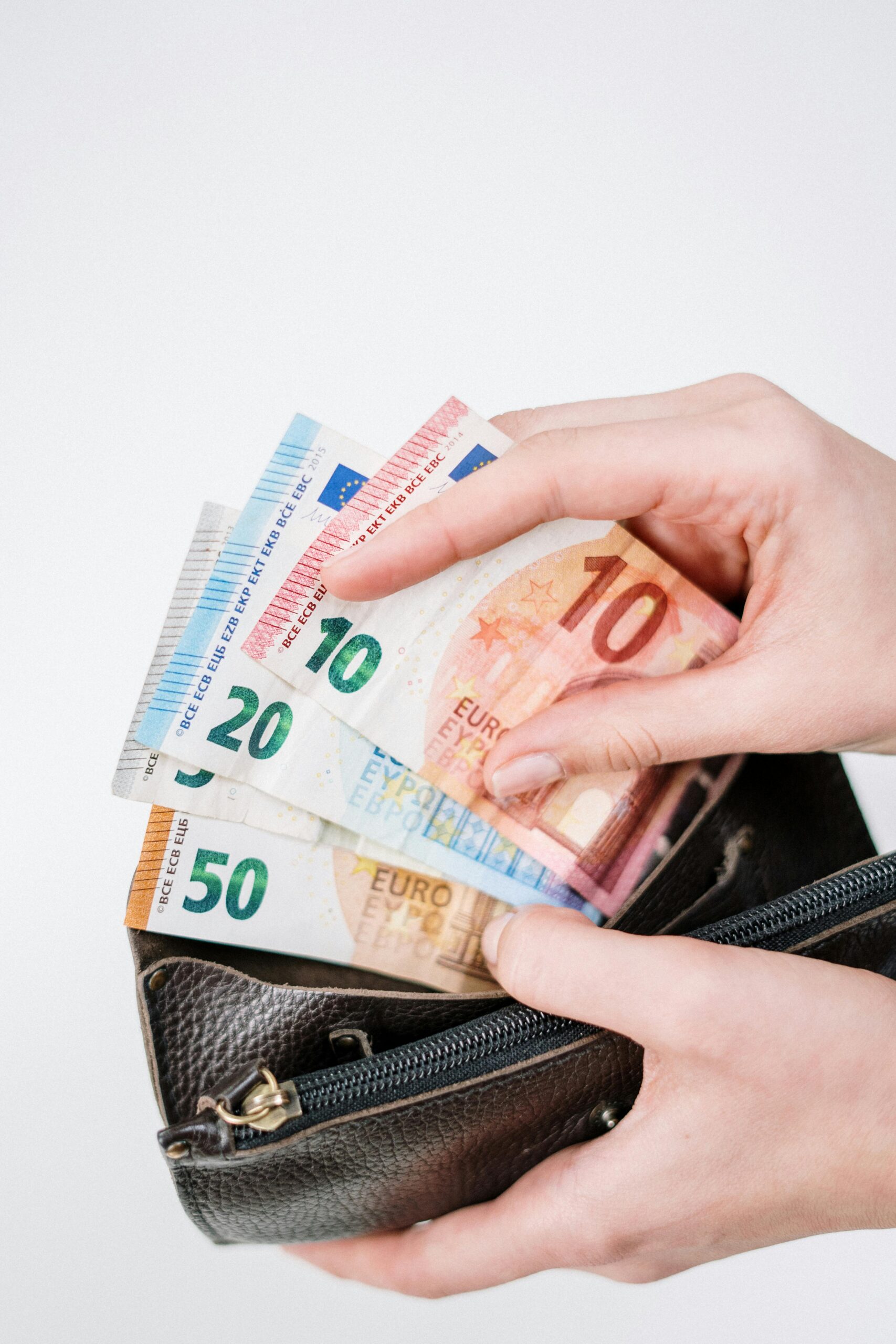
Find your start-up capital: a practical budget audit
Most people spend €25-50 a month just for convenience or out of habit, without attaching much importance to it. This "lost money" could be your potential start-up capital. It's not a question of whether you can invest it, but whether you can, whether it is a priority for you.
How to find your first 25-50 euros per month? Start with a critical audit of your day-to-day spending:
Real-life examples: how small habits build up
|
Habit (4 times a month) |
Cost per month |
Alternative use |
|
Lunching outside (8 € once, 4 times a month) |
32 € |
Investing in a broad market ETF |
|
Two café visits per week (€4 once, 8 times a month) |
32 € |
32 € savings/investment |
|
Empty orders (streaming, sports clubs, apps) |
15-25 € |
Creating a financial buffer |
If you can replace, for example, two monthly lunches out with a more budget-friendly solution, you'll have found your €30 a month that you can put towards long-term growth.
Aggressive saving at the beginning: The aim is to find that steady amount that doesn't threaten your quality of life, but is simply redirected from lower priority spending. The focus should be on continuity.
Discipline machine: setting automation
The secret to a small investor's success is not picking the right stock, it's... discipline against emotions. Always invest on the same date, regardless of market conditions.
Pay Yourself First (Pay Yourself First)
Set up an automatic standing order in your bank account for an investment account immediately on payday (or every 10th day, for example). It's a psychological trick: invest before you spend it. Let it be €25, it must be fixed and automatic.
Average Cost Accounting (DCA) - Your best friend
The best strategy for investing small amounts is to. Calculation of Average Cost (Dollar-Cost Averaging or DCA). This means that you buy the assets you choose (e.g. fund units) regularly for a fixed amount of money.
- Removes from emotion: You don't have to worry whether the market is currently "high" or "low".
- Smoothes out volatility: During market downturns, your amount will automatically buy more shares, and during upturns, less. In the long run, the purchase price evens out.
If your monthly amount is small, trying to time the market (i.e. waiting to buy during a downturn) is risky and pointless. DCA will keep you in the market and do all the calculations for you.

Priority and asset classes: focus on costs
When investing a small amount, you are not allowed to make mistakes on costs. Every euro spent on fees is a loss.
Why is one asset class enough for 99%?
At the beginning, you only need one asset class with highly diversified and low costs. Fragmenting small capital across many stocks and funds increases transaction costs and administrative burdens, not profits.
First and best choice: Global Index Fund (ETF)
Exchange traded funds (ETF-id) is the best tool for beginners. These are funds that can be bought just like shares, but which contain hundreds of different securities.
- Dispersal immediately: Buying for example MSCI World or FTSE All-World With a share in a UCITS ETF (€20-50), you get a one-transaction stake in hundreds of the world's biggest companies (e.g. Apple, Nestlé, Samsung). This spreads the risk to the maximum.
- The cost is gold: Pay particular attention to the fund management fee (TER, Total Expense Ratio). Select funds with TER of below 0.25% per year. Even an 1% per year cost will eat into your profits in the long run by hundreds of euros.
- UCITS requirement: Be sure to choose UCITS-requirements ETFs, as they are regulated in the European Union and aimed at European investors.
Use of fractional shares
If the price of your chosen ETF is €100 and you can only contribute €20 per month, the a function to buy shares of participants you to buy 0.2 shares in the fund. This is a much-needed feature for the small investor, removing the need to accumulate large sums before buying.

Buffer before portfolio: short-term vs. long-term cash
Ensuring financial security is a critical step before opening an investment account. Short-term savings and investments are two completely different things:
A. Financial buffer or emergency fund
This is your top priority. A financial buffer is easily accessible cash (preferably in a high-interest savings account) to cover your 3 to 6 months' living expenses. This buffer is a protection against unexpected expenses (job loss, car repair, dentist).
Why is this important? If you don't have a buffer, you may be forced to sell your investments (ETFs) just when the market has crashed - so you realise a loss. The buffer protects your long-term strategy.
B. An investment account is a long-term asset account
The money you put into ETFs is money that you invest in. will not be needed in the next 10-20 years. It's a fund for pensions, children's education or financial freedom. Never invest money you might need next year.
A practical first purchase: choosing a broker
When investing small amounts, the choice of broker is simple: choose the one you prefer platforms, where you can buy selected UCITS ETFs 0 € with transaction fee.
- Europe Online Platforms: Many EU regulated online-brokers have €0 commission offers for regular ETF purchases. This option is almost always the best for small investors.
- Banks in Estonia: Although convenient and familiar, transaction fees through local banks are often high for small amounts (€25-50), which can eat up a large part of the initial capital.
First transaction: Select a global ETF with a €0 transaction fee and make your first purchase. It's all about practice and habit building. Be glad you started - this is the hardest part!
Summary
Starting an investment with €25 a month is easy if you focus on discipline and minimising costs. Time works for you affiliation interest via.
Action Plan:
- Stop accumulating a financial buffer (3-6 months' expenses).
- Find €25-50 in the budget.
- Set up an automatic transfer and a DCA scheme with a €0 transaction fee.
- Forget the portfolio for 10 years.
Next Step: In the next article we will look at how average amount (e.g. €200-500 per month), new investment opportunities open up, such as more detailed diversification between equities and bonds and tax optimisation.
 English (UK)
  Eesti
Eesti